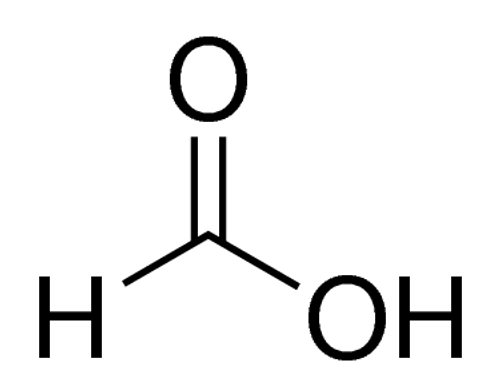
Formic Acid, 98-100% R. G. Reagent, ACS 98%, 1 Liter
You are from United States (US), price will be in United States (US) dollar ($).
United States dollar ($) - USD
$234.03
- Part Number:MIL-33015-1L
- Lead Time:2-4 weeks
- Quantity:each
- Size:1 liter / 32 ounce
- Style:chemical
Formic Acid 98-100% R. G. Reagent ACS ≥98% 1 Liter
- CAS Number 64-18-6
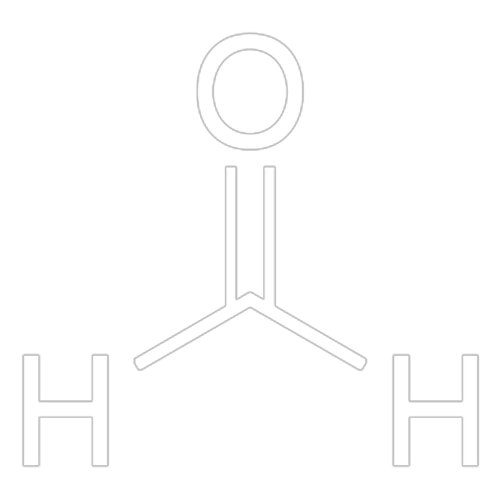
- Linear Formula HCOOH
- Molecular Weight 46.03
- Beilstein/REAXYS Number 1209246
- EC Number 200-579-1
- MDL number MFCD00003297
- PubChem Substance Id 329754437
- NACRES NA.21
| Quality Level | 200 |
| Grade | ACS reagent, Reagent. Ph. Eur. |
| Vapor Density | 1.6 (vs air) |
| Vapor Pressure | 44.8 mmHg (20°C) |
| Grade | puriss. p.a. |
| Assay | ≥98% |
| Autoignition Temperature | 1004°F |
| Expl. Lim. | 57 % |
| Impurities | ≤0.001% ammonium (NH4) ≤0.001% non-volatile matter ≤0.005% acetic acid (CH3COOH) |
| Refractive Index | n20/D 1.370 (lit.) |
| bp | 100-101°C (lit.) |
| mp | 8.2-8.4°C (lit.) |
| Density | 1.22 g/mL at 25°C (lit.) |
| anion traces | chloride (Cl-): ≤5 Mg/kg oxalate (C2O42-): ≤50 Mg/kg sulfate (SO42-): ≤5 Mg/kg sulfite (SO32-): ≤10 Mg/kg |
| cation traces | Ag: ≤0.02 Mg/kg Al: ≤0.05 Mg/kg Ba: ≤0.05 Mg/kg Be: ≤0.02 Mg/kg Bi: ≤0.1 Mg/kg Ca: ≤0.2 Mg/kg Cd: ≤0.05 Mg/kg Co: ≤0.02 Mg/kg Cr: ≤0.05 Mg/kg Cu: ≤0.02 Mg/kg Fe: ≤2 Mg/kg Ge: ≤0.05 Mg/kg K: ≤0.1 Mg/kg Li: ≤0.02 Mg/kg Mg: ≤0.5 Mg/kg Mn: ≤0.05 Mg/kg Mo: ≤0.02 Mg/kg Na: ≤0.5 Mg/kg Ni: ≤0.05 Mg/kg Pb: ≤0.02 Mg/kg Sr: ≤0.02 Mg/kg Ti: ≤0.1 Mg/kg Tl: ≤0.05 Mg/kg V: ≤0.05 Mg/kg Zn: ≤0.05 Mg/kg Zr: ≤0.1 Mg/kg |
General description
Formic acid is a simple organic acid. Formate group (-COOH) plays an important role to compose the complex biomolecules (acetic acid, glycine, various amino acids). It exhibits high polarity and its dipole moment is 1.41Debye.[2] It has been reported as a substitute for fuel in polymer electrolyte membrane (PEM) fuel cells. Its permeation through Nafion® 112 and 117 membranes has been compared with that of methanol.[3]
Application
Formic acid has been used to evaluate its first absolute differential elastic electron scattering cross-sections and angular differential cross-sections (incident electron energies in the range of 1.8 and 50eV).[2] It may be used in the preparation of HPLC buffer for mass spectrometric studies.[1]
Safety Information
Signal word Danger
Hazard statements H226-H302-H314-H331
Precautionary statements P210-P260-P280-P304 + P340 + P310-P305 + P351 + P338-P370 + P378
Supplemental Hazard Statements Corrosive to the respiratory tract.
RIDADR UN 1779 3(8) / PGII
WGK Germany 1
RTECS LQ4900000
Flash Point(F) 120.2°F
Flash Point(C) 49°C